
Beaming Game Details
Title: Beaming
Genre: Strategy
Developer: Kyle Florence
Publisher: Kyle Florence
Release Date: 6 June 2026
Store: Steam
Game Releasers: P2P
About Beaming Game
Master light, navigate complex hexagonal puzzles, and build your own challenges in the minimalist strategy game *Beaming*.
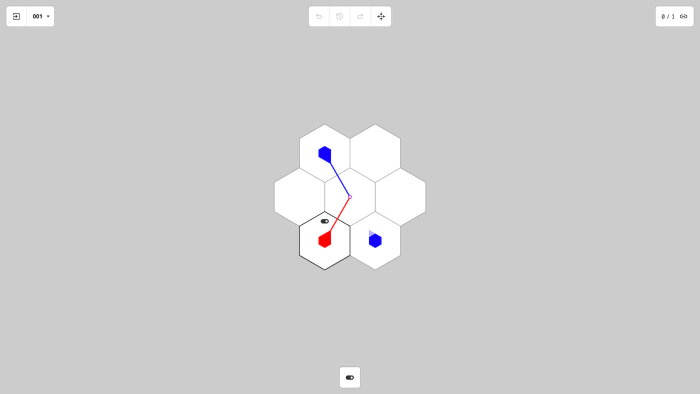
The world of puzzle design often leans heavily on the tried-and-true tropes of shifting blocks or matching colors, but occasionally, a title emerges that strips away the unnecessary excess to focus purely on the elegance of logic. Beaming stands as a testament to this philosophy, offering a minimalist experience that centers entirely on the manipulation of light across a complex, multi-faceted hexagonal grid. It is a game that respects the intelligence of the player, inviting them into a silent, systematic world where light is not just a visual element, but the primary currency of interaction and problem-solving.
At its core, the game is built upon a top-down, two-dimensional architecture that prioritizes clarity and precision. By utilizing a hexagonal layout rather than the more conventional square grids found in most logic titles, the game opens up unique geometric possibilities for light paths. This choice in design is not merely aesthetic; the six-sided nature of the cells creates a more fluid movement for light beams, allowing for angles and trajectories that would be impossible to navigate in a standard orthogonal environment. This fundamental structural decision defines every moment of the gameplay, forcing the player to think in terms of complexity and intersection rather than simple linear progression.
The primary objective of this experience is to guide beams of light from their source to specific destinations, forming stable connections that satisfy the requirements of each individual stage. While the goal might sound straightforward in theory, the execution is anything but simple. Each puzzle presents a unique configuration of barriers, conduits, and voids, demanding that the player carefully analyze the field before making a move. It is a slow, methodical process that rewards patience and deep contemplation, turning every completed puzzle into a small, hard-won victory of logic and spatial reasoning.
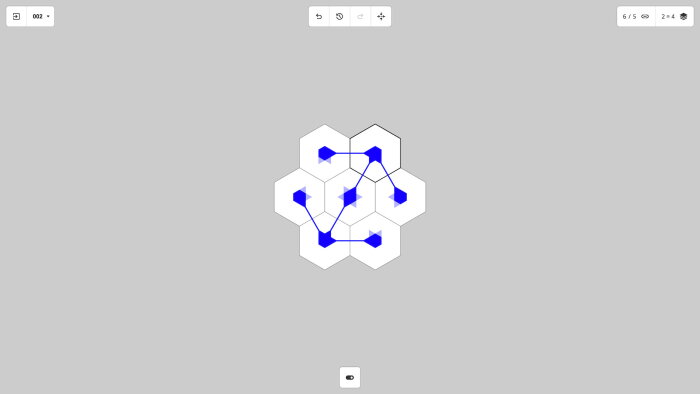
To navigate the intricacies of the grid, players are granted an arsenal of specialized tools designed to bend, refract, and transport light. These items—which include sophisticated reflectors, color-shifting filters, and interdimensional portals—function as the building blocks of the player’s strategy. A reflector might be necessary to turn a beam at a sixty-degree angle to bypass an obstacle, while a filter could be essential for changing the frequency of the light to match a specific target requirement. These components are more than just static objects; they interact dynamically with the beams, creating a chain reaction where one small placement can alter the entire flow of energy across the board.
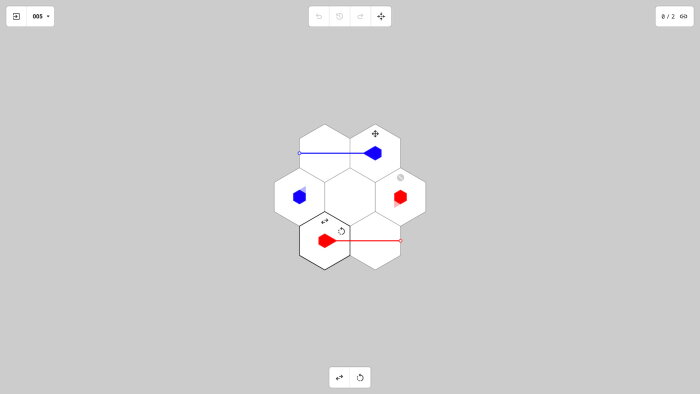
Beyond the physical objects placed on the grid, the game introduces a layer of active manipulation through a set of core actions. Players are not merely setting the board; they are constantly engaged with it through rotations, movements, toggles, and swaps. These actions allow the environment to remain fluid, meaning that a solution often requires the player to iterate on their initial setup, shifting pieces in real-time to observe how the light reacts to these modifications. By enabling this level of experimentation, the game ensures that the player remains an active participant rather than a passive observer, fostering a deep connection between human intent and machine-like logic.
The beauty of the experience lies in its commitment to intuitive learning. Rather than bombarding the user with dense manuals or aggressive tutorials, the game introduces its mechanics through subtle, carefully crafted progression. A new item or rule might be presented in a harmless, low-stakes environment, allowing the player to test its properties and witness its behavior firsthand. As levels advance, these rules are layered upon one another, creating a crescendo of complexity that challenges the player to synthesize everything they have learned into increasingly sophisticated solutions. It is a masterful demonstration of how to teach without lecturing, relying entirely on the player’s own curiosity to drive them forward.
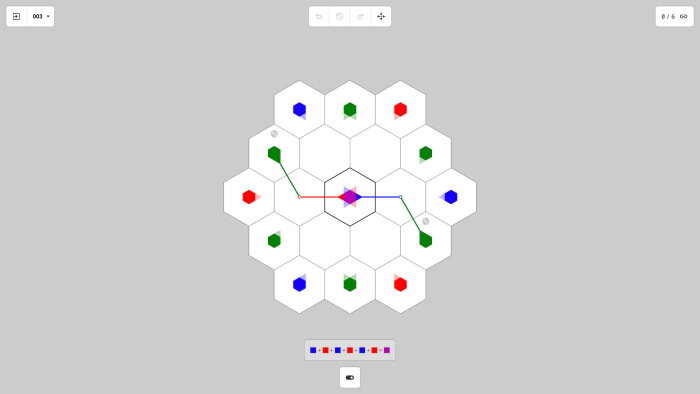
For those who find themselves stumped by a particularly devious configuration, or for players who prefer to have a concrete understanding of the laws governing the universe they are inhabiting, the game includes a comprehensive glossary. This document tracks every item, action, and attribute encountered so far, providing a technical breakdown for those who want to optimize their approach. The attributes themselves are a fascinating addition, as they can fundamentally change how a cell behaves—for instance, a specific cell might absorb light, reflect it differently, or act as an amplifier, adding an extra layer of depth to the grid that requires even more careful consideration during the planning phase.
In a digital landscape that often prizes visual clutter and high-octane stimulation, the visual style of this project remains strictly minimalist. The aesthetic is clean, sharp, and focused, ensuring that the player is never distracted from the task at hand. The high-contrast palette and geometric precision serve to highlight the beams, making the path of light the most prominent feature on the screen. This visual clarity is essential, as even a minor miscalculation in the pathing can lead to a failed connection, and the game’s minimalist approach ensures that every pixel of information provided to the player is both useful and necessary.
The longevity of the experience is bolstered significantly by the inclusion of a built-in puzzle editor. This feature effectively turns the game into a platform for creativity, allowing users to move beyond the pre-designed challenges and create their own complex logic webs. The ability to design, test, and share these puzzles ensures that there is always something new to encounter, even after the main campaign has been conquered. It transforms the title from a finite collection of puzzles into a community-driven project, where the brilliance of the developer’s engine is matched only by the ingenuity of the players who use it to craft their own intricate tests of skill.
Scheduled for release mid-way through 2026, this project is the product of a singular, dedicated vision. By handling both development and publication, the creator has maintained a tight grip on the identity of the experience, ensuring that every design choice remains faithful to the core idea of logical exploration. It occupies a distinct space in the strategy genre, appealing to those who enjoy the process of unraveling a knotted problem as much as they enjoy the final solution. It is a game about light, but more importantly, it is a game about the clarity of thought, the beauty of systems, and the endless potential found within the boundaries of a hexagonal grid.
Beaming Key Features
- Master complex light manipulation puzzles across a unique and challenging hexagonal grid!
- Unlock the secrets of reflectors, filters, portals, and more through intuitive, mind-bending gameplay!
- Test your logic with an ever-evolving series of puzzles that constantly push your skills to the limit!
- Embrace the stunningly clean and minimalist aesthetic that keeps your focus sharp!
- Unleash your creativity with a powerful built-in level editor to design and share your own custom masterpieces!
- Consult the handy in-game glossary if you ever need a little extra guidance on your puzzling journey!
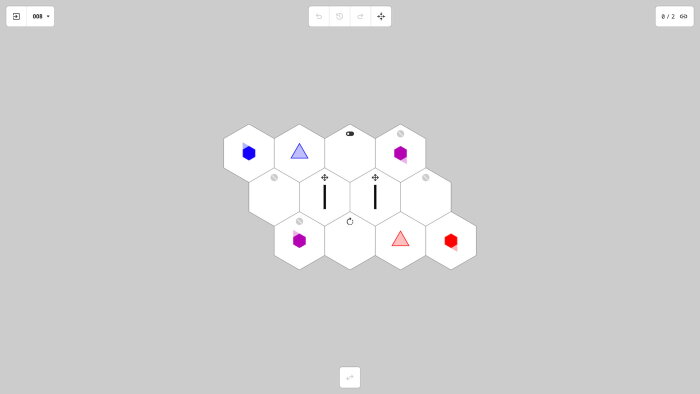
Beaming Gameplay
Download Links for Beaming
Download Beaming.Build.23310284
Mega
Beaming.Build.23310284.zip
1fichier
Beaming.Build.23310284.zip
Pixeldrain
Beaming.Build.23310284.zip
Mediafire
Beaming.Build.23310284.zip
Gofile
Beaming.Build.23310284.zip
Ranoz
Beaming.Build.23310284.zip
Bowfile
Beaming.Build.23310284.zip
Frdl
Beaming.Build.23310284.zip
Wdfiles
Beaming.Build.23310284.zip
Mixdrop
Beaming.Build.23310284.zip
Chomikuj
Beaming.Build.23310284.zip
Vikingfile
Beaming.Build.23310284.zip
Down mdiaload
Beaming.Build.23310284.zip
Hexload
Beaming.Build.23310284.zip
1cloudfile
Beaming.Build.23310284.zip
Usersdrive
Beaming.Build.23310284.zip
Megaup
Beaming.Build.23310284.zip
Clicknupload
Beaming.Build.23310284.zip
Dailyuploads
Beaming.Build.23310284.zip
Ddownload
Beaming.Build.23310284.zip
Rapidgator
Beaming.Build.23310284.zip
Nitroflare
Beaming.Build.23310284.zip
Multiup
Beaming.Build.23310284.zip
System Requirements for Beaming
To run the Beaming system, your computer must be operating on at least Windows 10 and be equipped with an Intel Pentium 4 processor—or any subsequent model—that fully supports the SSE3 instruction set. Furthermore, your device is required to have a minimum of 256 MB of available RAM and at least 1 GB of free storage space to ensure the software functions correctly.
Minimum:- OS: 10
- Processor: Intel Pentium 4 processor or later that's SSE3 capable
- Memory: 256 MB RAM
- Storage: 1 GB available space
How to Download Beaming PC Game
1. Extract Release
2. Launch The Game
3. Play!