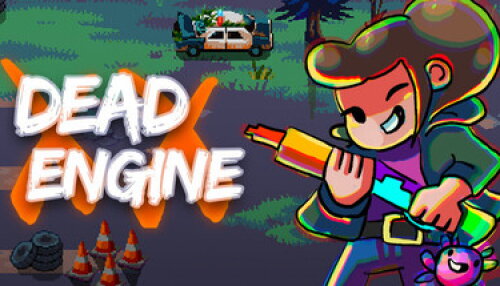
Dead Engine Game Details
Title: Dead Engine
Genre: Action, Adventure, Indie, Strategy
Developer: Chocolate Dungeon Games
Publisher: Red Axe Games
Release Date: 22 January 2026
Store: Steam
Game Releasers: P2P
About Dead Engine Game
**Survive intelligent zombie hordes in a pixel-art apocalypse, managing your camp, merging loot, and uncovering haunting tales in intense 10-20 minute runs.**
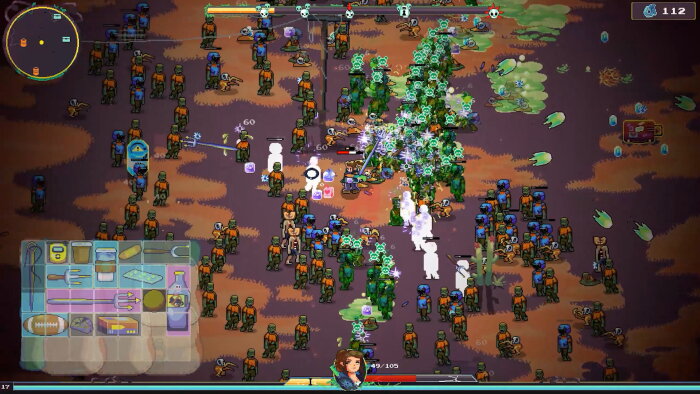
Dead Engine plunges the player into a bleak, pixelated vision of a post-apocalyptic cityscape, a world reclaimed by intelligent, relentlessly tracking undead. This is not the typical slow, shambling horror; the zombies here possess a chilling level of tactical awareness. Survival is a moment-to-moment calculation, a tense dance between engaging threats and tactical withdrawal, where the consequences of every decision echo throughout a run. The core gameplay loop revolves around exploration, scavenging for vital resources, and managing the precarious existence centered around a burgeoning survivor camp. Success hinges not just on combat prowess, but on meticulous inventory management and shrewd diplomatic choices when interacting with desperate wanderers. The evocative, hand-drawn pixel art style serves to enhance the atmosphere, lending a grim beauty to the ruined urban sprawl that players must navigate for short, intense bursts of gameplay, typically lasting between ten and twenty minutes, making each foray into the city a high-stakes affair where failure means starting anew, albeit with retained knowledge and potentially new unlockables that subtly shape future attempts.
The essence of Dead Engine’s challenge lies in its sophisticated enemy behavior. Moving beyond simple aggression, the zombies exhibit a terrifying collective intelligence. Utilizing a pathfinding system that actively models their perception of the environment and the player’s location, they don't wander aimlessly; they actively hunt. If one zombie spots a target, it signals others, leading to the rapid coalescence of smaller threats into formidable hunting hordes. This dynamic scalability means that a seemingly manageable situation can quickly spiral into an overwhelming crisis if the player draws too much attention or makes a hasty retreat. Furthermore, the introduction of ranged variants adds a crucial tactical layer; these undead utilize acid bombs launched over obstacles, forcing players to abandon static defensive positions and constantly seek superior ground or utilize environmental cover with precision. Surviving a run demands an intimate understanding of the map layout, identifying choke points, and establishing rudimentary defenses within the urban decay to slow, if not stop, the relentless advance of the unified undead threat.
Central to the long-term viability of the player’s efforts is the camp management system, a complex microcosm of societal rebuilding perched precariously on the edge of collapse. This hub is far more than a safe zone; it is a volatile ecosystem demanding constant upkeep across multiple vectors: morale, sanitation, shelter integrity, and resource allocation. Neglecting the basic needs of the sheltered survivors—whether it’s ensuring clean drinking water by keeping the filtration running, maintaining adequate housing to ward off exposure, or simply keeping the community fire lit—leads to rapid degradation of order. As morale plummets, the camp becomes unstable, potentially leading to internal conflict or, more terrifyingly, a breakdown in security, which is disastrous given the constant threat of infection. Every salvaged piece of metal, every found roll of fabric, must be prioritized not just for personal survival during expeditions, but for the collective infrastructure back at the base.
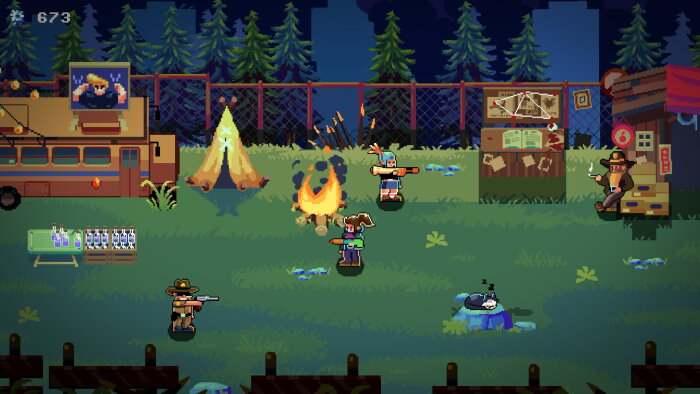
The ethical and practical dilemmas surrounding the integration of new members into the camp form one of the game’s most fraught decision points. Potential survivors approach the gate seeking refuge, promising aid and skill augmentation. However, trust is a lethal commodity in this world. A newly recruited individual might harbor the hidden contagion of the bite, waiting for the opportune moment to transform, infecting others and potentially destroying the fragile balance achieved within the camp. The player must rigorously vet newcomers, a process potentially involving harsh quarantine or immediate termination if suspicion arises. Conversely, some individuals, unwilling or unable to join the collective, instead offer trade opportunities. Engaging in commerce is beneficial, yielding valuable scrap resources necessary for upgrading gear and base facilities, but it is also the primary conduit for uncovering the game's narrative depth. These trading interactions serve as windows into the broader struggle, revealing haunting, deeply personal stories of loss, sacrifice, and difficult survival choices made by characters outside the player's immediate sphere of influence.
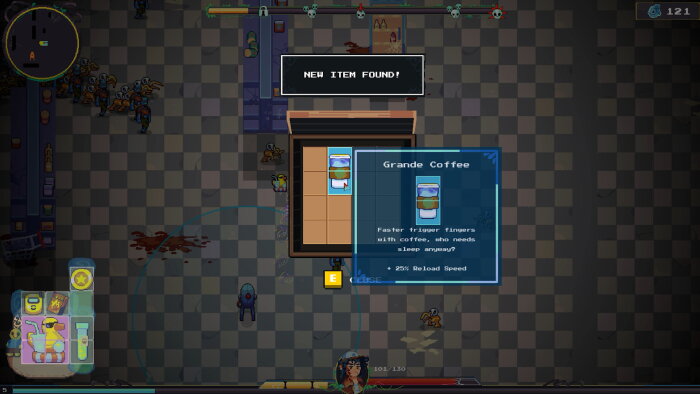
Inventory management in Dead Engine is a constant source of tension, intrinsically linked to the exploration phase. Players begin with a limited carrying capacity, forcing brutal choices about what constitutes essential gear versus potentially useful but bulky salvage. The solution lies in the acquisition and augmentation of backpacks, serving as the primary means of expanding storage capacity. Beyond simply finding larger containers, the system incorporates item merging—a mechanic that allows players to combine similar items to occupy a single inventory slot. This deliberate design choice encourages strategic organization; a well-organized, expanded backpack tailored to the planned expedition—stacking ammunition, prioritizing medical supplies, and hoarding specific crafting components—can be the defining factor that separates a successful scavenging run from a desperate, resource-starved retreat. Every recovered item, no matter how mundane it seems, carries the potential weight of future salvation.
The game rewards thorough exploration with the discovery of unique individuals scattered across the desolate urban map. These characters are not merely static quest-givers; locating them requires following subtle clues and traces left behind in the environment, adding a layer of environmental detective work to the exploration. Upon successful interaction, the player doesn't just gain a piece of lore or a quest; they unlock the ability to inhabit that character, stepping into their shoes with potentially different starting attributes, skills, and perspectives on the catastrophe. This mechanic deepens the roguelike structure, ensuring that subsequent runs feel fundamentally different based on whose journey the player is currently undertaking. These interconnected character arcs slowly weave together a richer tapestry of the world before and after the collapse, suggesting that the true survival story is found not just in the player's immediate actions, but in the accumulated memories and tragedies of the disparate survivors.
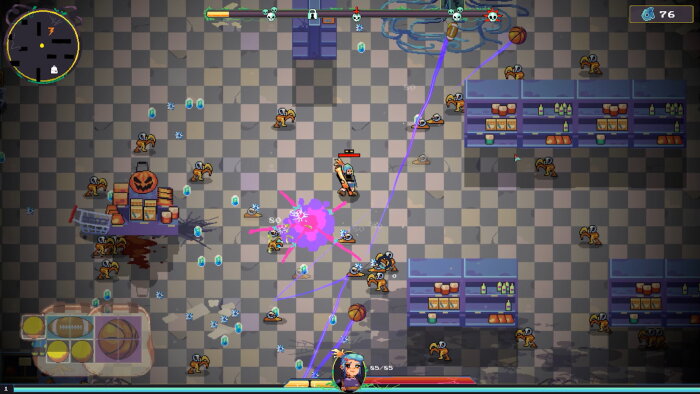
The mechanical depth extends into the environment itself, which is designed to be both an obstacle and a strategic asset. The hand-crafted pixel maps are intentionally complex, filled with ruins, alleyways, and climbable structures that encourage creative tactical deployment. Players are not passive victims of the environment; they are encouraged to actively manipulate it. This includes setting sophisticated traps—wire snares, explosive charges, or simple barricades—intended to funnel or halt the advancing undead. Furthermore, base building elements allow for the construction of defensive turrets, providing automated support against threats when the player is forced to defend the camp perimeter or is caught outside during a critical moment. The environment constantly demands adaptation; cover that worked against slow zombies may be useless against intelligent, horde-forming units or those capable of lobbing corrosive projectiles.
Scheduled for release in early 2026, Dead Engine is the creation of Chocolate Dungeon Games, with publishing handled by Red Axe Games. It is positioned firmly within the Action, Adventure, Indie, and Strategy genres, signaling a multi-faceted experience that balances visceral combat with deep tactical planning and resource management. The promise of four unique playable characters and a roguelike progression system suggests high replayability, driven by the constant pressure of the short, intense survival runs. Ultimately, Dead Engine seeks to deliver a challenging survival experience where the player's choices—who to trust, what to carry, where to run, and how fiercely to defend the remnants of humanity—sculpts the narrative of their desperate existence against an intelligent, evolving enemy force in a beautifully rendered, decaying world.
Dead Engine Key Features
- Fight intelligent, adapting zombie hordes in intense 10-20 minute survival runs!
- Master hand-drawn pixel environments, using terrain and traps to annihilate the undead!
- Manage your volatile camp: control who enters, keep morale high, and burn the bitten!
- Loot, merge, and expand your backpack to carry the gear that keeps you alive!
- Uncover haunting survivor stories through crucial trading interactions!
- Recruit unique characters, unlocking new playable heroes and perspectives!
- Engage with advanced zombie AI that tracks, hunts, and launches ranged attacks!
- Build defenses, set traps, and customize your survival strategy!
- Experience a deep Roguelike progression system to push further each run!
Dead Engine Gameplay
Download Links for Dead Engine
Download Dead.Engine.Build.22468718
Mega
Dead.Engine.Build.22468718.zip
1fichier
Dead.Engine.Build.22468718.zip
Pixeldrain
Dead.Engine.Build.22468718.zip
Mediafire
Dead.Engine.Build.22468718.zip
Gofile
Dead.Engine.Build.22468718.zip
Ranoz
Dead.Engine.Build.22468718.zip
Drop
Dead.Engine.Build.22468718.zip
Bowfile
Dead.Engine.Build.22468718.zip
Frdl
Dead.Engine.Build.22468718.zip
Wdfiles
Dead.Engine.Build.22468718.zip
Mixdrop
Dead.Engine.Build.22468718.zip
Chomikuj
Dead.Engine.Build.22468718.zip
Vikingfile
Dead.Engine.Build.22468718.zip
Down mdiaload
Dead.Engine.Build.22468718.zip
Hexload
Dead.Engine.Build.22468718.zip
1cloudfile
Dead.Engine.Build.22468718.zip
Usersdrive
Dead.Engine.Build.22468718.zip
Krakenfiles
Dead.Engine.Build.22468718.zip
Megaup
Dead.Engine.Build.22468718.zip
Clicknupload
Dead.Engine.Build.22468718.zip
Dailyuploads
Dead.Engine.Build.22468718.zip
Ddownload
Dead.Engine.Build.22468718.zip
Rapidgator
Dead.Engine.Build.22468718.zip
Nitroflare
Dead.Engine.Build.22468718.zip
System Requirements for Dead Engine
To run the game *Dead Engine*, the minimum system requirements mandate an operating system of Windows 10, coupled with at least an Intel Core i3-3210 processor and 4 GB of RAM; graphically, it requires DirectX Version 10 compatibility, and storage needs are minimal at just 1 GB of available space. For a more optimal experience, however, the developers recommend upgrading to Windows 11, utilizing an Intel Core i5-4690 processor, doubling the memory to 8 GB of RAM, and ensuring a dedicated graphics card equivalent to an NVIDIA GeForce GTX 660 or an AMD Radeon R7 265, while the necessary storage requirement remains consistent at 1 GB.
Minimum:- OS: Windows 10
- Processor: Intel Core i3-3210
- Memory: 4 GB RAM
- DirectX: Version 10
- Storage: 1 GB available space
- OS: Windows 11
- Processor: Intel Core i5-4690
- Memory: 8 GB RAM
- Graphics: NVIDIA GeForce GTX 660 or AMD Radeon R7 265
- Storage: 1 GB available space
How to Download Dead Engine PC Game
1. Extract Release
2. Launch The Game
3. Play!