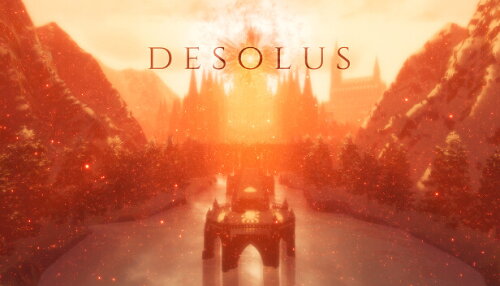
DESOLUS Game Details
Title: DESOLUS
Genre: Adventure, Indie, Strategy
Developer: Mark J. Mayers
Publisher: The Quantum Astrophysicists Guild
Release Date: 15 October 2026
Store: Steam
Game Releasers: P2P
About DESOLUS Game
Wield black holes and manipulate time to solve mind-bending, Escher-inspired puzzles and save a crumbling Gothic city from total annihilation.
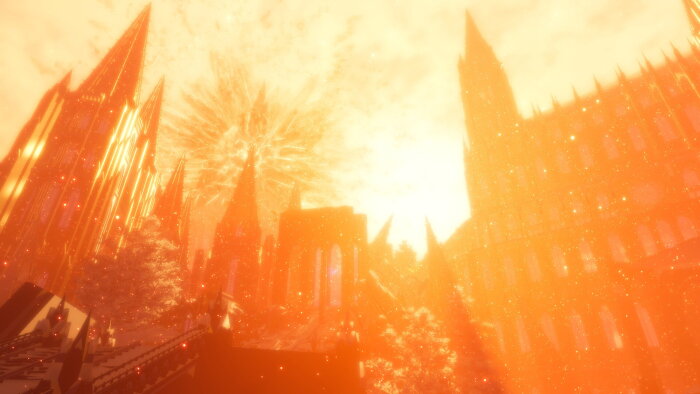
The city of Desolus stands as a haunting monument to a timeline shattered by forces beyond human comprehension. It is a place where Gothic architecture, characterized by towering spires and intricate stone tracery, groans under the weight of an eternal struggle between the remnants of what was and the shadows of what is yet to come. In this desolate urban sprawl, the air itself seems to shimmer with the instability of fractured reality. Players entering this world find themselves cast into a surreal, first-person experience that challenges the very foundations of spatial perception and logic. It is not merely a place to explore, but an architectural enigma that continuously shifts, refusing to remain tethered to a singular moment in history.
At the heart of the experience is the cataclysm, an event of unknown origin that tore the fabric of time asunder. Through this rupture, portals have emerged like jagged wounds across the cityscape, granting access to disparate eras within the same geographic coordinates. The city does not exist in a linear fashion; rather, it occupies multiple states of decay and restoration simultaneously. To navigate these streets is to engage in a constant dance with temporal displacement, as the player must decipher how the past dictates the structure of the future. Understanding this connection is the only way to begin the arduous task of piecing together a world that has been torn apart by impossible cosmic forces.
The primary tool for managing these rifts is the manipulation of black holes, singular points of immense intensity that act as bridges between the past and the future. By harnessing the power of these gravitational anomalies, the player can traverse time to mend the architectural ruins that block their path. This is not a simple task of walking through a door, but a complex puzzle of causality. If a bridge has collapsed in the present, perhaps it stands tall in the past, waiting for the player to step through a portal and find their way across. By transitioning between these temporal states, the player must force the environment to align, turning the city’s fragility into a strategic asset.
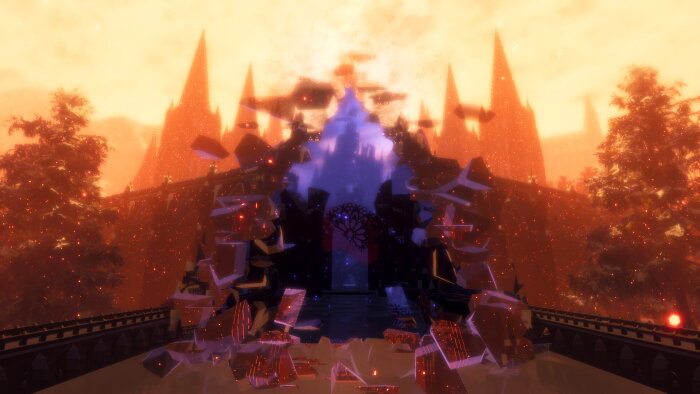
These puzzles draw heavy inspiration from the impossible perspectives and mind-bending geometries popularized by M.C. Escher. As time grows increasingly unstable, the laws of physics begin to buckle, creating environments where up and down lose their meaning and staircases lead to places that defy standard Euclidean geometry. Solving these challenges requires a profound shift in perspective, forcing the player to think spatially and conceptually. One must observe how the placement of a black hole in one era influences the physical integrity of a wall or floor in another. It is a brilliant exercise in logic that rewards those who can visualize the city as a fluid, interconnected machine rather than a static map.
Beyond the raw manipulation of time, the player must interact with forgotten technology left behind by a lost era. Scattered throughout the hollowed-out cathedrals and abandoned civic buildings are ancient holograms and mechanisms that hold the key to structural restoration. These devices are more than mere trinkets; they are essential for moving massive, dormant portals between the crumbling stories of buildings. By activating these systems, the player can manipulate the environment on a grand scale, aligning conduits and pathways that allow them to traverse structures which only partially exist in any single timeline. It is a process of reconstruction that feels both archaeological and divine.
As the journey progresses, it becomes clear that the player is not alone in this ruined expanse. A mysterious guardian, a figure woven into the very legends of Desolus, acts as an enigmatic partner. This entity offers whispers of insight into the cataclysm, guiding the desperate soul through layers of obfuscation and mystery. The relationship between the player and the guardian is one of quiet necessity, a collaboration to prevent the final convergence where past and future might collide with enough force to erase the city from existence entirely. Every interaction with this guardian peels back a layer of the haunting narrative, revealing the tragic cost of the city’s ambition and the price of its ultimate survival.
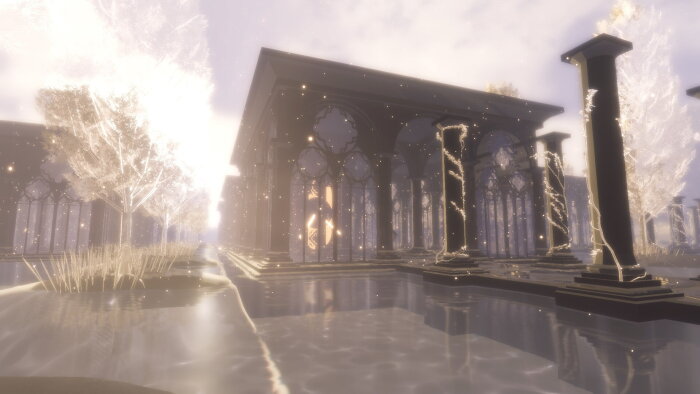
The atmosphere of the city is designed to be as much a character as the player themselves. The visual language of the Gothic architecture—buttresses that reach for the clouds and gargoyles that watch with indifferent stone eyes—provides a somber, beautiful backdrop to the existential dread of the time-bending puzzles. As the cataclysm looms closer, the sky grows heavy and the sounds of the city begin to distort, reflecting the encroaching collapse. This immersive environment has garnered significant critical acclaim, having been selected for numerous festivals and even featured as an exhibit at the Smithsonian American Art Museum. This recognition highlights the game's status as a work of interactive art that transcends the typical boundaries of digital entertainment.
With its release scheduled for October 15, 2026, the game promises to be a landmark title in the genres of adventure, indie, and strategy gaming. Developed by Mark J. Mayers and brought to life through the publishing efforts of The Quantum Astrophysicists Guild, it invites players to immerse themselves in a world where history is never truly gone. It is a game for those who crave deep, cerebral challenges paired with an evocative, somber aesthetic. Whether one is unraveling the secrets of a lost civilization or standing at the edge of a black hole waiting to shift the tide of time, the journey through Desolus is an experience of profound discovery. Saving the city is the ultimate goal, but the true prize is the understanding of the thin, shifting line between what has happened and what has yet to come.
DESOLUS Key Features
- Master mind-bending Escher-inspired puzzles that defy logic and distort reality
- Command powerful black holes to tear through time and restore a shattered gothic city
- Explore breathtaking past and future versions of a massive, crumbling architectural marvel
- Utilize ancient, lost technology to manipulate holograms and traverse impossible structures
- Unravel a haunting, mysterious narrative alongside a secretive guardian to prevent total annihilation
- Experience an award-winning adventure featured at the Smithsonian American Art Museum
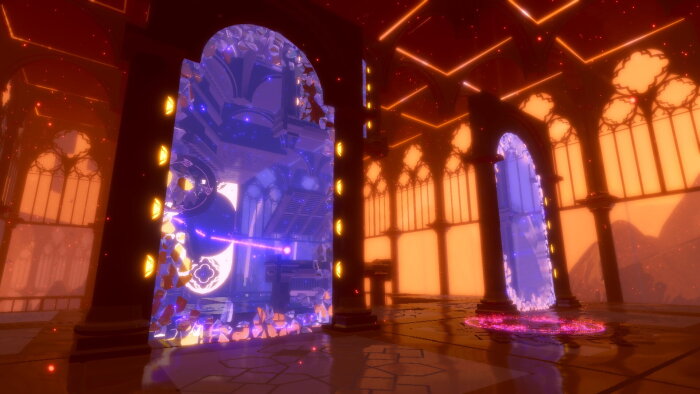
DESOLUS Gameplay
Download Links for DESOLUS
Download DESOLUS-GoldBerg
1fichier
DESOLUS-GoldBerg.zip
Pixeldrain
DESOLUS-GoldBerg.zip
Mediafire
DESOLUS-GoldBerg.zip
Gofile
DESOLUS-GoldBerg.zip
Bowfile
DESOLUS-GoldBerg.zip
Buzzheavier
DESOLUS-GoldBerg.zip
Wdfiles
DESOLUS-GoldBerg.zip
Mixdrop
DESOLUS-GoldBerg.zip
Chomikuj
DESOLUS-GoldBerg.zip
Vikingfile
DESOLUS-GoldBerg.zip
Down mdiaload
DESOLUS-GoldBerg.zip
Hexload
DESOLUS-GoldBerg.zip
1cloudfile
DESOLUS-GoldBerg.zip
Usersdrive
DESOLUS-GoldBerg.zip
Megaup
DESOLUS-GoldBerg.zip
Clicknupload
DESOLUS-GoldBerg.zip
Dailyuploads
DESOLUS-GoldBerg.zip
Rapidgator
DESOLUS-GoldBerg.zip
Nitroflare
DESOLUS-GoldBerg.zip
Multiup
DESOLUS-GoldBerg.zip
Hitfile
DESOLUS-GoldBerg.zip
System Requirements for DESOLUS
To experience DESOLUS, your PC must run on Windows 10 or 11 and feature at least 4 GB of available storage space along with DirectX 11 support. For a baseline experience, your system should be equipped with an AMD Ryzen 5 2600X or Intel Core i7-6800K processor, 12 GB of RAM, and a graphics card equivalent to an AMD Radeon RX 5700 or NVIDIA GeForce 1070. However, to enjoy the game at its recommended performance levels, it is advised to upgrade your hardware to an AMD Ryzen 5 3600X or Intel Core i5-10600K processor, increase your memory to 16 GB of RAM, and utilize a more capable GPU such as an AMD Radeon RX 6600XT or NVIDIA RTX 2070.
Minimum:- OS: Windows 10 / 11
- Processor: AMD Ryzen 5 2600X / Intel® Core™ i7-6800K
- Memory: 12 GB RAM
- Graphics: AMD Radeon RX 5700 / NVIDIA GeForce 1070
- DirectX: Version 11
- Storage: 4 GB available space
- OS: Windows 10 / 11
- Processor: AMD Ryzen 5 3600X / Intel® Core™ i5-10600K
- Memory: 16 GB RAM
- Graphics: AMD Radeon RX 6600XT / NVIDIA RTX 2070
- DirectX: Version 11
- Storage: 4 GB available space
How to Download DESOLUS PC Game
1. Extract Release
2. Launch The Game
3. Play!