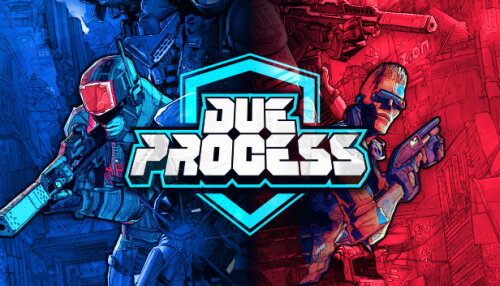
Due Process Game Details
Title: Due Process
Genre: Action, Adventure, Indie, Simulation, Strategy
Developer: Giant Enemy Crab
Publisher: Giant Enemy Crab
Release Date: 3 November 2020
Store: Steam
Game Releasers: P2P
About Due Process Game
**Master strategy and teamwork in *Due Process*, the tactical FPS where procedurally generated maps ensure every match brings a fresh, unpredictable challenge for asymmetric faction combat.**
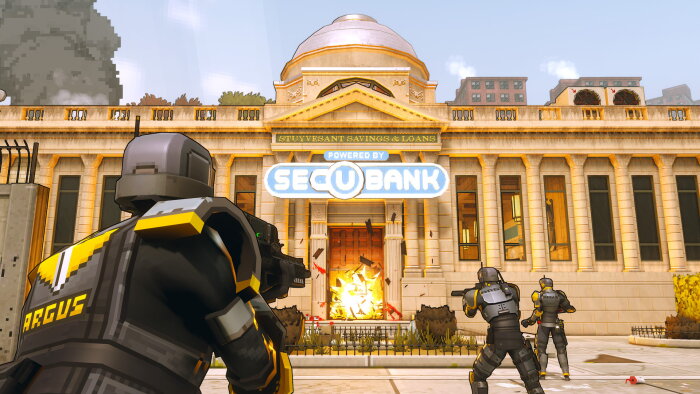
Due Process stands as a compelling and innovative entry into the tactical first-person shooter genre, fundamentally centered around the crucial interplay between meticulous planning and flawless execution. It distinguishes itself from the myriad of twitch-based shooters that often prioritize raw reaction time above all else, by placing strategic foresight and coordinated teamwork at the absolute apex of importance. Victory in the demanding arenas of Due Process is not simply earned through superior aim, though proficiency with weaponry certainly helps; it is meticulously constructed through pre-round strategy sessions, intelligent asset deployment, and the ability of a five-person unit to adapt collaboratively when the meticulously crafted blueprints inevitably clash with the unpredictable reality of combat. The core mechanic that enforces this strategic imperative is the game's revolutionary approach to map design. Unlike traditional FPS titles where players quickly memorize the layout, sightlines, and common choke points of a handful of static maps, Due Process perpetually challenges the player base with novelty. Every engagement takes place on a map that has been freshly constructed, or at least significantly reconfigured, through a sophisticated, procedurally assisted level generation process. This continuous infusion of unfamiliar territory ensures that no two tactical problems are ever identical, demanding that teams approach each encounter as a unique puzzle requiring a fresh, dedicated solution. The developers, Giant Enemy Crab, actively curate and refine these generated environments, ensuring that while the geometry is new, the underlying tactical possibilities remain balanced and engaging, constantly pushing the boundaries of what a tactical encounter can feel like. This commitment to perpetual variation is the engine that drives the game's replayability and its core strategic identity; staleness is systematically avoided, forcing players to engage their critical thinking faculties from the moment the match begins.
The structural foundation of a match in Due Process is built around distinct, sequential phases, emphasizing that the battle is often won or lost before the first shot is fired. Central to this is the dedicated Planning Phase, a period where the clock is ticking, and communication is paramount. During this interval, players are afforded the opportunity to survey the newly generated battlefield, identify potential objectives, anticipate the enemy's likely approach vectors, and, critically, plot their own movements and engagements. Utilizing in-game tools, team members can collaboratively sketch out routes, define firing lanes, designate areas of control, and pre-position essential equipment. This is where the abstract concept of "teamwork" solidifies into concrete, actionable instructions. Furthermore, the game introduces a resource management layer tied to this planning stage; players carefully select and allocate assets from their personal armory. These are not infinite resources that replenish after a brief respawn timer. Once an item—be it a crucial piece of surveillance equipment, a defensive barricade, or a specialized weapon—is deployed onto the map and subsequently destroyed or lost due to tactical miscalculation, it is gone for the remainder of the engagement across the subsequent rounds. This heavy penalty for wastefulness imbues every deployment decision with significant weight, turning the armory into a finite pool of strategic potential that must be conserved and utilized with surgical precision over the multi-round conflict structure.
The operational flow of a typical engagement is structured across three intense rounds, further compounding the strategic depth derived from asset permanence. Because equipment losses carry over, a team that suffers heavy losses in infrastructure or specialized weaponry in Round One enters Round Two at a tangible disadvantage, forcing them to pivot their strategy drastically. This round-based progression also encourages macro-level strategic planning beyond the immediate firefight. Does the team expend high-value assets early to secure a quick, decisive victory, risking burnout for later rounds? Or do they adopt a more conservative, attrition-based approach, hoping to wear down the opposition while preserving their most potent tools for a final, decisive push? The dynamic nature of the generated maps often means that the initial plan, no matter how thoroughly vetted in the planning phase, will inevitably encounter unforeseen complications once the actual engagement commences. A teammate might be pinned down unexpectedly, a well-anticipated flanking route might be unexpectedly fortified by the enemy, or the enemy's initial push might deviate wildly from the predicted pattern. This "no plan survives first contact" reality transitions the focus from rigid adherence to the blueprint to fluid, real-time adaptation and communication, demanding instantaneous coordination via integrated voice communication to pivot and adjust fireplans mid-combat.
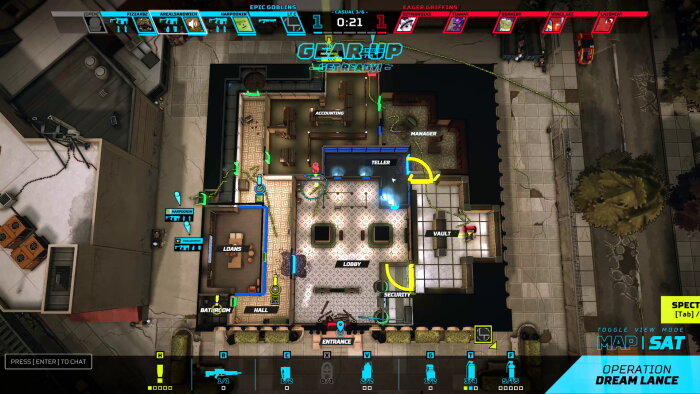
Dramatically enhancing the strategic layering of Due Process is the implementation of asymmetric warfare, pitting two distinct factions against one another, each possessing fundamentally different philosophies of engagement, weapon loadouts, and inherent capabilities. On one side stands the formidable corporate military force. This faction embodies the pinnacle of modern tactical doctrine, fielding superior, cutting-edge gear optimized for close-quarters battle (CQB). Their operational philosophy leans heavily on the principles of speed, surprise, and overwhelming violence of action. When working in concert, guided by a solid pre-plan, members of this force are expected to execute with ruthless efficiency, systematically clearing hostile positions room by room or executing rapid, decisive strikes aimed directly at the heart of the opposing defense. Their strength lies in precision, overwhelming firepower, and the tactical discipline to maintain formation and clear angles aggressively. They thrive on proactive, direct assaults where their technological superiority can be leveraged to its maximum effect.
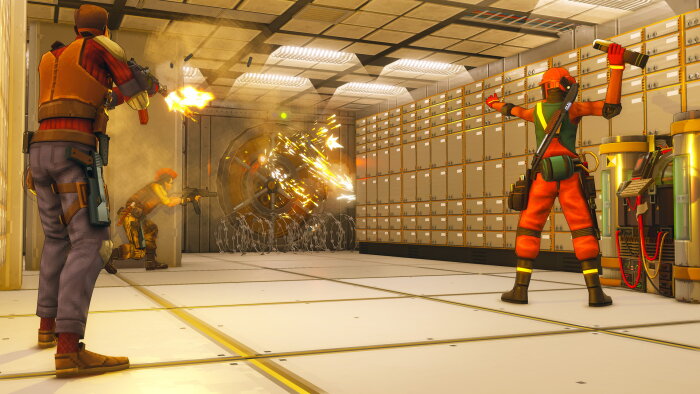
Conversely, the opposing force consists of a ragged coalition of outlaws fighting against corporate dominance. These insurgents utilize what amounts to be a collection of salvaged, older, or rudimentary weaponry and equipment. While they lack the sheer technological edge of their adversaries, their tactical advantage is rooted deeply in cunning, deception, and exploiting the environment. Their strategy is inherently reactive and manipulative; they must anticipate the enemy’s methodical advances and spend their limited resources setting intricate traps, coordinating devastating crossfires across intersecting sightlines, and exploiting any momentary lapse or gap in the corporate force’s aggressive momentum. For the outlaws, successful flanking maneuvers and luring heavily armed opponents into prepared kill zones are more critical than direct confrontation. Their strength is the exploitation of strategic vulnerabilities that the corporate military, perhaps overly reliant on their formalized training and gear, might overlook. This fundamental disparity ensures that a confrontation between these two forces is not just a battle of aiming skill, but a fascinating clash of strategic ideologies—the methodical application of superior force versus the creative application of cunning and territorial control.
This foundational asymmetry is deeply intertwined with the procedurally generated map environment rather than being hampered by it. Because the map layout changes weekly, the corporate team cannot consistently rely on memorized CQB best practices for specific, unchanging structures; they must adapt their speed and aggression to the unique angles and cover provided by the new configuration. Similarly, the outlaws cannot rely on the same established ambush points; they must quickly survey the fresh terrain to identify natural choke points, elevation advantages, or structural weaknesses that they can exploit to negate the corporate weaponry advantage. The dynamic nature of the maps becomes the great equalizer and the great challenge simultaneously, ensuring that stale meta-strategies decay rapidly, forcing constant innovation in tactical doctrine for both sides.
The entire ecosystem of Due Process is engineered to reward thoughtful, non-reactive gameplay during the pre-round phase. The game’s design ethos implies that the true measure of a skilled squad is not how well they win a fair gunfight, but how effectively they use their planning time—the planning phase—to stack the odds overwhelmingly in their favor before the engagement even begins. When a team successfully communicates a complex maneuver during this period, leveraging their limited assets to create overlapping fields of fire or an intricate diversionary strategy, they are playing the game as intended. The tension in Due Process arises not just from the possibility of being shot, but from the agonizing pressure of the ticking clock during the planning session, knowing that every second wasted drawing a poorly conceived line on the digital map could translate directly into a lost round later when the execution falls apart.
In summary, Due Process is a tactical FPS experience built upon pillars of procedural map generation, asymmetric faction design, and a mandatory, time-bound planning phase. Developed by Giant Enemy Crab and released in late 2020, it sits comfortably within the Action, Strategy, and Simulation genres, appealing specifically to players who find satisfaction in strategic depth over twitch reflexes. It is a game where the dialogue in the planning room—the coordination of scarce resources, the mutual agreement on a course of action, and the shared understanding of the immediate tactical scenario—is as vital as the trigger pull itself. The commitment to delivering fresh, unique battlegrounds on a recurring basis ensures that the tactical challenge remains perpetually relevant, demanding not just that players master the mechanics, but that they master the art of collaborative, adaptive warfare in a constantly shifting strategic landscape.
Due Process Key Features
- Experience constantly evolving tactical challenges with brand new PROCEDURALLY-GENERATED MAPS delivered weekly!
- Victory hinges on masterful PLANNING & EXECUTION—strategy and teamwork are paramount!
- Utilize the dedicated PLANNING PHASE to draw up intricate attack strategies over voice chat!
- Every round presents a fresh tactical puzzle, ensuring no two games are the same!
- Adapt on the fly as NO PLAN SURVIVES FIRST CONTACT—coordinate live to turn the tide!
- Master asymmetric warfare by playing as two radically different factions!
- Enforce martial law as the corporate force, prioritizing SPEED, SURPRISE, and VIOLENCE OF ACTION!
- Outwit your foes as the rag-tag outlaws, leveraging CUNNING to set deadly traps and exploit flanks!
- Manage your armory wisely—equipment lost in a round is gone for good across the three-round match!
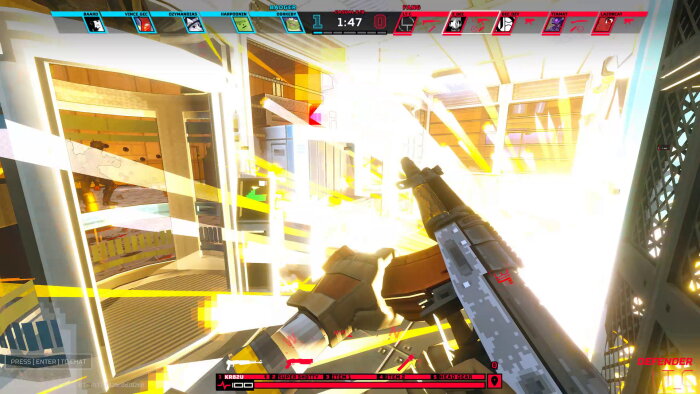
Due Process Gameplay
Download Links for Due Process
Download Due.Process.Build.24229623
1fichier
Due.Process.Build.24229623.zip
Gofile
Due.Process.Build.24229623.zip
Buzzheavier
Due.Process.Build.24229623.zip
Vikingfile
Due.Process.Build.24229623.zip
System Requirements for Due Process
The system requirements for "Due Process" are consistent across both minimum and recommended specifications regarding the operating system, demanding Windows 10 64 bit, and a DirectX Version 11, while also requiring a broadband internet connection and $10 \text{ GB}$ of available storage space; however, performance expectations increase significantly: minimum CPU requirements start at a 3000-series Intel i5 or a 2000-series AMD Ryzen 3, paired with $6 \text{ GB}$ of RAM and a minimum GPU of an Nvidia GeForce GTX 760 or ATI RX 570, whereas the recommended setup jumps to an 8000 Series Intel i5 or a 2000 Series AMD Ryzen 5, $10 \text{ GB}$ of RAM, and a more capable graphics card in the form of a GeForce GTX 1060 or ATI RX 580, with a microphone and SSD being recommended for both tiers.
Minimum:- OS: Windows 10 64 bit
- Processor: 3000-series Intel i5; 2000-series AMD Ryzen 3
- Memory: 6 GB RAM
- Graphics: Nvidia GeForce GTX 760; ATI RX 570
- DirectX: Version 11
- Network: Broadband Internet connection
- Storage: 10 GB available space
- Additional Notes: Microphone and SSD recommended
- OS: Windows 10 64 bit
- Processor: 8000 Series Intel i5; 2000 Series AMD Ryzen 5
- Memory: 10 GB RAM
- Graphics: GeForce GTX 1060; ATI RX 580
- DirectX: Version 11
- Network: Broadband Internet connection
- Storage: 10 GB available space
- Additional Notes: Microphone and SSD recommended
How to Download Due Process PC Game
1. Extract Release
2. Launch The Game
3. Play!