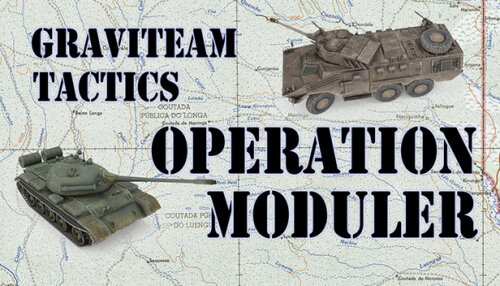
Graviteam Tactics: Operation Moduler Game Details
Title: Graviteam Tactics: Operation Moduler
Genre: Simulation, Strategy
Developer: Graviteam
Release Date: 6 November 2018
Store: Steam
Game Releasers: P2P
About Graviteam Tactics: Operation Moduler Game
**Relive the intense 1987 Bush War clash as SADF and UNITA strike the Angolan 47th Brigade in the meticulously recreated Battle of the Lomba River in this realistic tactical simulation.**
The historical context surrounding the military engagement detailed in "Graviteam Tactics: Operation Moduler Game" is deeply rooted in the protracted and complex struggle known as the Angolan Bush War. This conflict, which spanned several decades, was characterized by a multitude of competing factions, shifting alliances, and significant external intervention, primarily involving the People's Armed Forces for the Liberation of Angola (FAPLA), the Marxist-Leninist governing force, and the National Union for the Total Independence of Angola (UNITA), a major anti-government movement. The events leading up to the specific scenario featured in the game focus intensely on the strategic importance of the Lomba River and the UNITA headquarters located at Jamba, highlighting the high stakes of the 1987 offensives.
The Angolan government forces, FAPLA, harbored a clear and decisive military objective for the 1987 campaign season. Their strategic blueprint dictated a southward and then southeastward advance, pushing directly from their established base at Cuito Cuanavale. The immediate geographical target was the Lomba River. Successfully crossing this natural barrier was intended to be the precursor to securing the town of Mavinga. Mavinga itself was not merely another objective; its value lay overwhelmingly in the presence of a functional airstrip. Control of this airfield would have fundamentally altered the tactical and logistical landscape of the war, providing the Angolan Air Force with the necessary capability to project power further south and support the anticipated subsequent phase of the offensive: a direct drive toward Jamba, the principal stronghold and command center for UNITA. The fall of Jamba was widely viewed by FAPLA strategists as synonymous with the effective neutralization of UNITA as a cohesive fighting entity, thereby solidifying the MPLA government's control over the southern regions of Angola.
Conversely, South Africa’s involvement, channeled through the South African Defence Force (SADF), had been a consistent feature of the conflict for many years. Pretoria’s engagement was fundamentally driven by its interests in maintaining regional stability conducive to its own strategic objectives, particularly concerning the ongoing liberation struggle in South West Africa (modern-day Namibia). UNITA, occupying the vital southeastern quadrant of Angola, served as an effective buffer state, hindering the operations of SWAPO guerrillas attempting to infiltrate Namibian territory from Angolan soil, notably the Caprivi Strip and the Okavango Panhandle. Recognizing the existential threat posed by the FAPLA offensive aimed at Jamba, the SADF committed substantial military resources in 1987. Colonel Deon Ferreira was placed in command of the 20th South African Brigade, the spearhead of the intervention force designed to bolster UNITA's defensive capabilities.
The composition of the SADF contingent was formidable and tailored for mechanized maneuver warfare. The backbone of the force was the 61st Mechanised Battalion Group, renowned for its mobility and armoured punch. This core was significantly augmented by infantry elements drawn from the highly respected 32nd Battalion, known for its proficiency in cross-border operations, providing two motorized infantry companies, alongside a dedicated Anti-Tank (AT) squadron capable of neutralizing heavy armour. Further infantry support came from two motorized companies detached from the 101st Battalion. Crucially for sustained combat operations, the SADF contribution also included three batteries of artillery, providing essential fire support across various ranges to suppress enemy concentrations and destroy fortified positions. In total, this conventional South African force numbered 2,609 men. This, however, was only part of the equation; the SADF components operated in close concert with UNITA fighters, whose numbers were estimated to be several thousand strong, forming a combined defense force ready to meet the FAPLA onslaught.
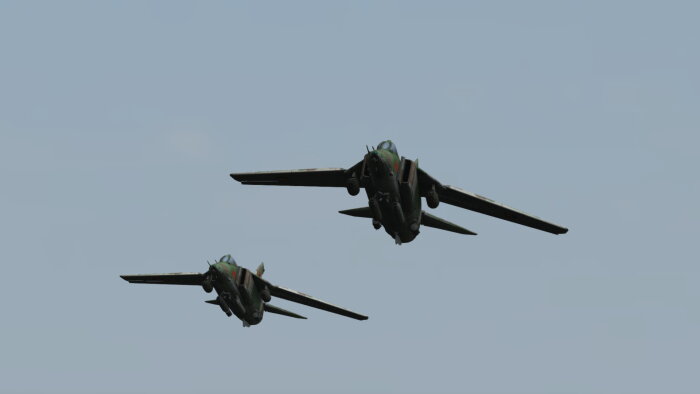
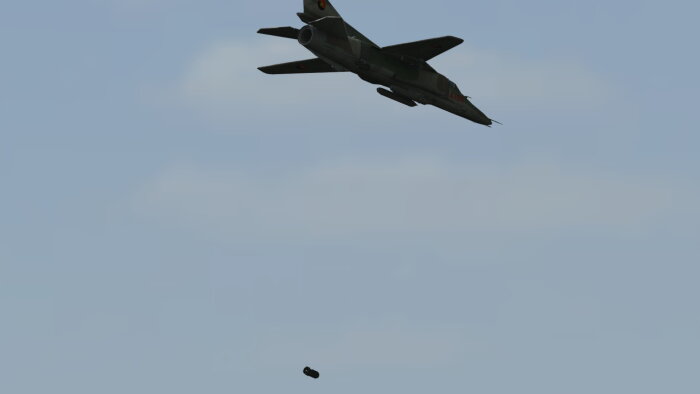
The opposing FAPLA force assembled for the 1987 drive represented a significant concentration of military might. In total, FAPLA marshaled eight brigades for the overall operational thrust. Four of these brigades were designated for holding actions, tasked with garrison duties and providing local escort to secure the lines of communication supporting the main advance. The remaining four brigades constituted the primary offensive grouping, the so-called "hammer fist" of the invasion plan. This elite attacking force comprised an estimated 6,000 soldiers, supported by a substantial contingent of armored vehicles, specifically around 80 main battle tanks, in addition to significant accompanying artillery assets. Furthermore, the Angolan plan incorporated the crucial element of air superiority, meaning the advancing brigades could rely on augmented air support to suppress or destroy enemy positions that proved resilient to ground attack. Within this offensive spearhead, the 47th Brigade was recognized as the strongest and most forward-deployed of the FAPLA assault units aimed at the Lomba River sector.
The tactical execution of the FAPLA offensive involved a coordinated pincer movement aimed at outflanking and overwhelming the UNITA and SADF defenders positioned along the Lomba River. The 47th Brigade was tasked with executing the western arm of this maneuver. Its mission involved rounding the westernmost source of the Lomba River and then driving eastward, maintaining a strong presence along the southern bank of the river. Concurrently, the 59th Brigade executed the corresponding movement on the northern side of the river. These two brigades were not merely operating in parallel; their success was intrinsically linked to a critical engineering objective. Intelligence gathered by the SADF indicated that the 47th and 59th Brigades were collaborating closely in the construction of a Military Tactical Bridge (TMM bridge) at a specific, highly strategic location just east of where the Cuzizi River flowed into the Lomba River. The successful deployment of this bridge would have allowed FAPLA to rapidly transfer its entire armored and mechanized reserve force across the river barrier, creating an immense tactical advantage for the subsequent push towards Mavinga.
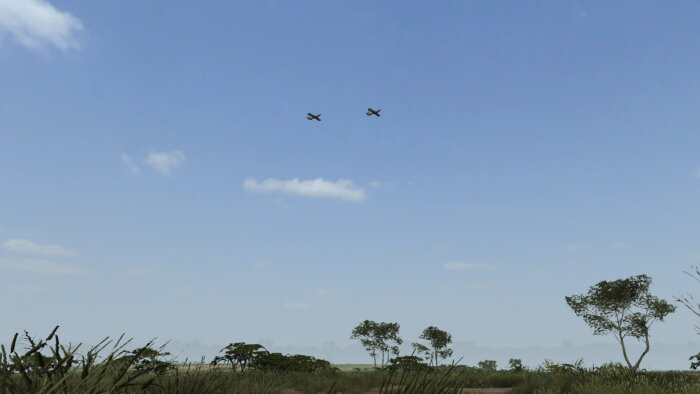
It was against the backdrop of this impending critical junction, specifically targeting the capabilities of the forces constructing that bridgehead, that the counter-offensive was launched. In the early morning hours of October 3, 1987, between 08:00 and 09:00 hours, the combined SADF and UNITA tactical groups initiated their preemptive attack. The specific target of this well-timed assault was the FAPLA 47th Brigade, positioned on the southern flank of the river crossing attempt. This engagement marked a pivotal confrontation in the operational cycle of 1987, where the momentum of the Angolan offensive was intended to be decisively broken through concentrated South African and UNITA action before their coordinated plans could fully mature. This action was mirrored by other engagements occurring concurrently, reflecting the broader strategic scope of the operation.
The simulation aspects of "Graviteam Tactics: Operation Moduler Game" are built upon meticulous foundational research, aiming to transpose these historical realities into a playable strategic environment. The game features two distinct operational scenarios, allowing the player to command forces from either the Angolan FAPLA perspective or the combined SADF and UNITA structure, thereby experiencing the tactical dilemmas and objectives faced by both sides during this turbulent period. Central to the fidelity of the simulation is the precise digital recreation of the operational terrain. The area chosen for the game covers an area of 144 square kilometers centered around the confluence of the Cuzizi and Lomba rivers—the very nexus point of the planned FAPLA crossing and the subsequent SADF counter-attack. Furthermore, the tactical engine adheres closely to the historical organizational structure and equipment designations in use by the various participants, including the Angolan units and the South African formations, during the specific operations known historically as Saludando a Octubre (Saluting October) and Moduler, ensuring that the leadership, command capabilities, and limitations of the historical units are faithfully represented within the game mechanics. This commitment to detail aims to provide a compelling and historically resonant simulation experience for strategy enthusiasts.
Download Links for Graviteam Tactics: Operation Moduler
Download Graviteam.Tactics.Mius.Front.Build.15814271
1fichier
Graviteam.Tactics.Mius.Front.Build.15814271.zip
Gofile
Graviteam.Tactics.Mius.Front.Build.15814271.zip
Datanodes
Graviteam.Tactics.Mius.Front.Build.15814271.zip
Buzzheavier
Graviteam.Tactics.Mius.Front.Build.15814271.zip
Chomikuj
Graviteam.Tactics.Mius.Front.Build.15814271.zip
System Requirements for Graviteam Tactics: Operation Moduler
To run Graviteam Tactics: Operation Moduler, users will need a 64-bit operating system, specifically Windows 8.1 or newer for the minimum requirements, with the recommended OS being Windows 10 (both 64-bit only). The minimum processing power required is an AMD FX-8320 or an Intel Core i3-4160, while the recommended specification jumps to an AMD FX-8350 or an Intel Core i7-6700. For memory, 4 GB of RAM is the baseline, though 8 GB is recommended; the game demands 5 GB of storage space regardless of the settings. Graphics card minimums are an AMD Radeon 7570 or an nVidia GeForce GTX 650 with 1GB of VRAM, whereas the recommended configuration suggests an AMD Radeon R9 or an nVidia GeForce GTX 970 with 4GB of VRAM. Finally, DirectX Version 9.0c and a compatible sound card are necessary for both minimum and recommended setups.
Minimum:- OS *: Windows 8.1 (64-bit only)
- Processor: AMD FX-8320/Intel Core i3-4160
- Memory: 4 GB RAM
- Graphics: AMD Radeon 7570/nVidia GeForce GTX 650 1GB
- DirectX: Version 9.0c
- Storage: 5 GB available space
- Sound Card: DirectX 9 Compatible
- OS: Windows 10 (64-bit only)
- Processor: AMD FX-8350/Intel Core i7-6700
- Memory: 8 GB RAM
- Graphics: AMD Radeon R9/nVidia GeForce GTX 970 4GB
- DirectX: Version 9.0c
- Storage: 5 GB available space
- Sound Card: DirectX 9 Compatible
How to Download Graviteam Tactics: Operation Moduler PC Game
1. Extract Release
2. Launch The Game
3. Play!