
Pixel Airport Tycoon 3D Game Details
Title: Pixel Airport Tycoon 3D
Genre: Indie, Simulation, Strategy
Developer: hans-jürgen müller
Publisher: hans-jürgen müller
Release Date: 14 August 2026
Store: Steam
Game Releasers: P2P
About Pixel Airport Tycoon 3D Game
Build, manage, and expand your ultimate international hub in *Pixel Airport Tycoon 3D*, where you can switch seamlessly between classic 2D and immersive 3D views to master global air travel.
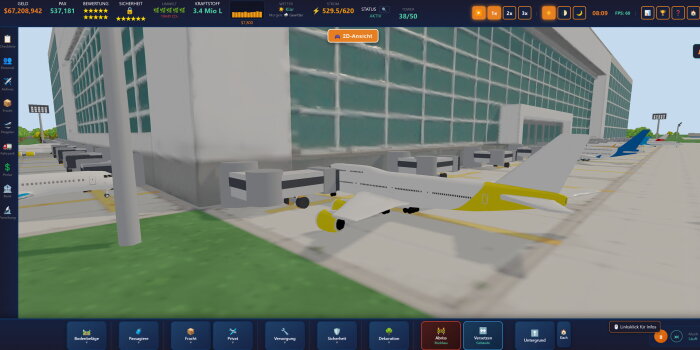
The development of Pixel Airport Tycoon 3D represents a monumental leap forward for the simulation genre, bridging the gap between nostalgic isometric design and the cutting-edge demands of modern 3D gaming. At its heart, this experience invites players to step into the shoes of an aviation visionary, tasked with transforming a modest, underdeveloped runway into a sprawling, global transit engine. The core philosophy of the game is rooted in the freedom of choice, allowing users to toggle seamlessly between a precise, tactical top-down perspective and an immersive, fully realized 3D environment. This dual-view system ensures that the player is never hindered by the limitations of their chosen interface, as they are empowered to monitor minute operational details from a comfortable overhead height or admire the kinetic energy of their terminal through a free-orbit camera that captures every shadow, landing, and takeoff with stunning fidelity.
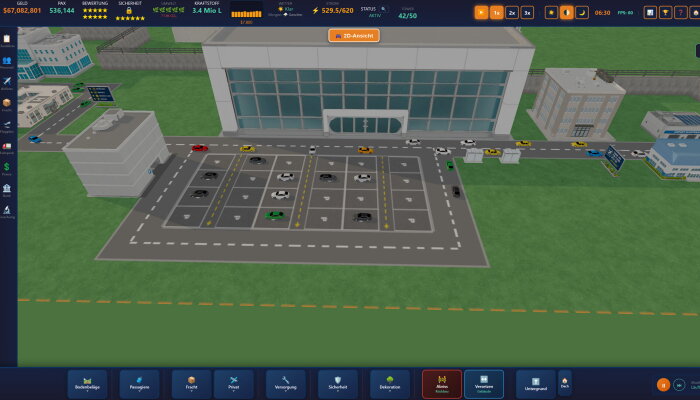
The architectural depth provided by the game's building mechanics is unparalleled, offering a canvas that is as wide as it is challenging. With over forty distinct building types, players must master the nuances of infrastructure, from laying complex underground fuel pipelines and intricate baggage belt networks to establishing a robust road system that supports the lifeblood of the terminal. The distinction between a private propeller airfield—a quiet, efficient space for smaller aircraft—and a booming commercial hub is massive, requiring distinct strategies for runway configuration, taxiway layout, and apron design. Every structure, from the smallest parking garage to the most advanced air traffic control tower, is rendered as a detailed object that reacts dynamically to the environment, ensuring that the physical growth of the airport feels like a tangible, living achievement rather than just a collection of assets.
Managing the flow of air traffic is perhaps the most exhilarating challenge within the simulation. Players must account for the diverse requirements of various aircraft classes, ranging from nimble private planes to massive long-haul commercial jets. The introduction of air traffic control towers of varying sizes creates an immediate, logical progression: players must hire skilled controllers to manage the increasingly complex flight queues, ensuring that arrivals and departures occur in real-time without bottlenecks. The sight of planes taxiing to their stands, undergoing rigorous maintenance, and refueling before taking off into a simulated day-night cycle creates a hypnotic rhythm that rewards players for their planning and foresight. Success in the competitive skies depends on how well one can balance the runway throughput with the limitations of their ground crew and gate availability.
Logistics and cargo handling go beyond simple transport, turning the airport into a sophisticated industrial zone. The inclusion of a comprehensive cargo system allows players to build specialized logistics networks that handle everything from temperature-sensitive refrigerated goods to high-stakes express freight. By establishing dedicated customs offices and signing lucrative contracts with global shipping companies, players can diversify their revenue streams and solidify their status as a logistics powerhouse. This aspect of the game demands an appreciation for detail, as each type of freight has its own unique requirements for handling, vehicles, and processing, forcing the player to constantly upgrade their facilities and staff training to remain efficient and profitable in an unforgiving global marketplace.
Human resources and fleet management represent the backbone of the operational system. The game features an intricate staff system, requiring the recruitment and management of various specialists, including ramp agents, de-icing crews, maintenance technicians, and security personnel. All vehicles, from catering trucks to heavy-duty fire engines, operate within a logic-driven network, moving intelligently to fulfill their tasks across the tarmac. A robust fleet manager interface allows the player to monitor the health and performance of every vehicle, facilitating a transition toward modern, electric-powered ground support equipment. This attention to detail forces the player to consider long-term maintenance costs and technological upgrades, ensuring that the airport remains not just functional, but also modern and sustainable.
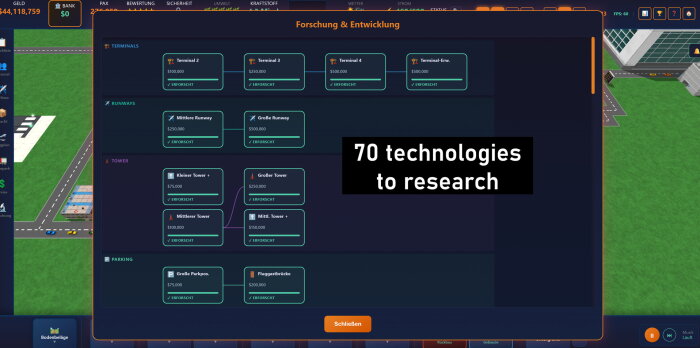
Sustainability and environmental impact are central to the game’s economic model, reflecting the real-world pressures faced by modern aviation hubs. Players must carefully manage their CO2 footprint, balancing the necessity of expansion with the costs of environmental taxes and the benefits of investing in green certifications. The research tree provides a pathway for innovation, allowing players to unlock sustainable aviation fuels, advanced solar harvesting, and high-efficiency power grids that reduce reliance on outdated infrastructure. This ecological layer adds a meaningful dimension to the gameplay, forcing the manager to decide when to prioritize immediate profit versus what is necessary for the long-term health of the airport and its surrounding environment.
The economic engine of the game is designed to be as challenging as it is rewarding, with fluctuating fuel prices and a sophisticated banking system that allows for calculated risk. Players have full control over a wide array of revenue streams, including passenger fees, terminal services, and rental income from shops and lounges. The ability to manipulate pricing, negotiate complex contracts with airlines, and manage loans creates a volatile but compelling financial landscape. Success is not just measured by the number of airplanes on the ground, but by the ability to maintain a healthy balance sheet while meeting the high standards required for maximum passenger satisfaction and security ratings. An airport that ignores security protocols or fails to handle emergency situations with care will quickly lose its reputation and its viability.
Finally, the atmosphere of the game is polished to provide a smooth, enjoyable experience regardless of the user's preferred pace. With support for multiple languages, a comprehensive in-game guide, and a variety of game speeds, the simulation is accessible to newcomers while offering sufficient depth for hardcore strategy fans. Whether one prefers to build a quiet, relaxing landing strip for private pilots or a chaotic, humming nexus of international travel, the game provides the tools to execute that vision. Every detail, from the ambient soundtrack that plays through the daily grind to the visual flair of runway lighting illuminating the night, contributes to a sense of accomplishment. Pixel Airport Tycoon 3D is a testament to the enduring appeal of the management genre, offering a sandbox where the only limit is the player's ability to dream, plan, and build the world's most successful aviation empire.
Pixel Airport Tycoon 3D Key Features
- * Switch effortlessly between a classic top-down 2D view and an immersive 3D world with a fully rotatable camera
- * Construct a massive transport hub from scratch with over 40 distinct building types including terminals, runways, and hangars
- * Take charge of complex flight operations with real-time arrivals, departures, and a fully functional air traffic control system
- * Manage a high-stakes cargo empire featuring specialized freight handling, customs offices, and global logistics contracts
- * Master the elements with dynamic weather systems that force you to manage de-icing protocols and emergency landings
- * Command a professional fleet of service vehicles and staff, from refueling crews to fire departments
- * Dive into a deep economic simulation where you set fees, negotiate airline deals, and take out loans to fuel your expansion
- * Research cutting-edge technology and embrace sustainable practices like solar power and electric vehicles to lower your carbon footprint
- * Experience the thrill of growth as you progress from a small private airfield to a bustling, world-class international airport
Pixel Airport Tycoon 3D Gameplay
Download Links for Pixel Airport Tycoon 3D
Download Pixel.Airport.Tycoon.3D.Build.24765730
Mega
Pixel.Airport.Tycoon.3D.Build.24765730.zip
1fichier
Pixel.Airport.Tycoon.3D.Build.24765730.zip
Pixeldrain
Pixel.Airport.Tycoon.3D.Build.24765730.zip
Mediafire
Pixel.Airport.Tycoon.3D.Build.24765730.zip
Gofile
Pixel.Airport.Tycoon.3D.Build.24765730.zip
Bowfile
Pixel.Airport.Tycoon.3D.Build.24765730.zip
Buzzheavier
Pixel.Airport.Tycoon.3D.Build.24765730.zip
Frdl
Pixel.Airport.Tycoon.3D.Build.24765730.zip
Wdfiles
Pixel.Airport.Tycoon.3D.Build.24765730.zip
Mixdrop
Pixel.Airport.Tycoon.3D.Build.24765730.zip
Chomikuj
Pixel.Airport.Tycoon.3D.Build.24765730.zip
Vikingfile
Pixel.Airport.Tycoon.3D.Build.24765730.zip
Down mdiaload
Pixel.Airport.Tycoon.3D.Build.24765730.zip
Hexload
Pixel.Airport.Tycoon.3D.Build.24765730.zip
1cloudfile
Pixel.Airport.Tycoon.3D.Build.24765730.zip
Usersdrive
Pixel.Airport.Tycoon.3D.Build.24765730.zip
Megaup
Pixel.Airport.Tycoon.3D.Build.24765730.zip
Clicknupload
Pixel.Airport.Tycoon.3D.Build.24765730.zip
Dailyuploads
Pixel.Airport.Tycoon.3D.Build.24765730.zip
Rapidgator
Pixel.Airport.Tycoon.3D.Build.24765730.zip
Nitroflare
Pixel.Airport.Tycoon.3D.Build.24765730.zip
Multiup
Pixel.Airport.Tycoon.3D.Build.24765730.zip
System Requirements for Pixel Airport Tycoon 3D
To run *Pixel Airport Tycoon 3D*, your system must be running a 64-bit version of Windows 10 or 11 and have at least 2 GB of available storage space. For the minimum experience, the game requires a 2.0 GHz dual-core processor, 4 GB of RAM, and a DirectX 11-compatible graphics solution—such as an integrated Intel HD 520 or UHD 620—though performance will be limited to lower graphical settings. For optimal gameplay, it is strongly recommended to use a more robust setup featuring a 2.5 GHz quad-core processor (like an Intel Core i5 or AMD Ryzen 5), 8 GB of RAM, and either a dedicated graphics card with 2 GB of VRAM or a modern integrated GPU like the Intel Iris Xe. Regardless of your hardware configuration, a Windows-compatible onboard sound card is necessary to ensure full audio functionality.
Minimum:- OS: Windows 10 (64-Bit)
- Processor: Dual-Core, 2.0 GHz (z. B. Intel Core i3)
- Memory: 4 GB RAM
- Graphics: Grafik: DirectX-11-fähig mit WebGL, integrierte Grafik ab ca. 2016 (z. B. Intel HD Graphics 520 / UHD 620) — 3D läuft auf niedriger Grafikqualität
- DirectX: Version 11
- Storage: 2 GB available space
- Sound Card: Windows-compatible onboard sound
- Additional Notes: 64-bit required
- OS: Windows 10 / 11 (64-Bit)
- Processor: Quad-Core, 2.5 GHz (z. B. Intel Core i5 / AMD Ryzen 5)
- Memory: 8 GB RAM
- Graphics: Dedicated GPU with 2 GB VRAM, or modern integrated graphics (e.g. Intel Iris Xe)
- DirectX: Version 11
- Storage: 2 GB available space
- Sound Card: Windows-compatible onboard sound
- Additional Notes: 64-bit required
How to Download Pixel Airport Tycoon 3D PC Game
1. Extract Release
2. Launch The Game
3. Play!