Docked Game Details
Title: Docked
Genre: Simulation
Developer: Saber Interactive
Publisher: Saber Interactive
Release Date: 5 March 2026
Store: Steam
Game Releasers: P2P
About Docked Game
**Rebuild your family's devastated port operation using heavy machinery precision and shrewd management in the realistic simulator, *Docked*.**
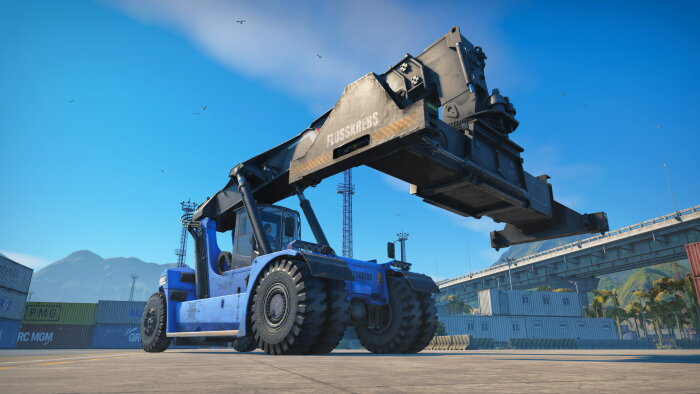
The narrative centerpiece of Docked revolves around a solemn return to the ravaged shores of Port Wake, a place deeply scarred by a recent, destructive hurricane. This is not merely a setting for a game; it is the inheritor of a legacy, a family business teetering on the precipice of collapse. The player steps into the crucial role of the lead operator, tasked with the monumental, often overwhelming responsibility of resuscitation. The core loop of this simulation hinges on a commitment to realistic operational engagement. It demands more than just casual interaction; it necessitates a deep, almost intimate understanding of the heavy machinery required to wrestle a modern port back from ruin. Every successful unloading, every precisely stacked container, every expertly guided vehicle contributes directly to the slow, painstaking process of breathing life back into the infrastructure that once sustained the community. This initial setup establishes a powerful emotional stake, transforming simple gameplay objectives into acts of filial duty and civic necessity within the context of a struggling coastal town.
The daily grind in Docked is a relentless cycle dictated by the unforgiving demands of maritime commerce and disaster recovery. As the lead operator, the player is invariably pulled in multiple directions simultaneously, mirroring the high-stress environment of a genuine working dock. When the deep-sea vessels finally breach the harbor, the immediate priority shifts to rapid, efficient cargo discharge. This involves mastering the operation of colossal ship-to-shore cranes, machines whose sheer scale demands respect and precision. Beyond the immediate unloading, the simulation weaves in logistical challenges: where must the incoming raw materials be staged? How can the flow of goods be managed to prevent bottlenecks that paralyze the entire operation? Furthermore, the responsibility extends outward. The port is a lifeline; fulfilling external contracts means loading flatbed trucks with essential supplies—medicine, construction materials, and vital resources—destined for areas outside Port Wake still grappling with the storm’s aftermath. This dual focus on internal recovery and external aid solidifies the player's role as both a business manager and a crucial community resource.
A defining characteristic that elevates Docked beyond a simple management game is the uncompromising focus on vehicle operation fidelity. This is not a game where machinery handling is abstract or simplified. Instead, players are expected to engage with the physical realities of operating heavy equipment. The intricacies of maneuvering a massive reach stacker through tight aisles or carefully aligning a massive gantry crane are central mechanical challenges. The game emphasizes realistic size and scale, meaning players must constantly account for overhangs, blind spots, and the sheer momentum of tons of steel and cargo. For example, tasks involving lashing down cargo or repositioning awkward loads require careful attention to weight distribution and rope tension—subtleties that directly impact stability and safety. This commitment to mechanical realism ensures that proficiency in operating the fleet is earned through practice and careful execution, offering a high degree of mechanical satisfaction when a complex maneuver is completed flawlessly under pressure.
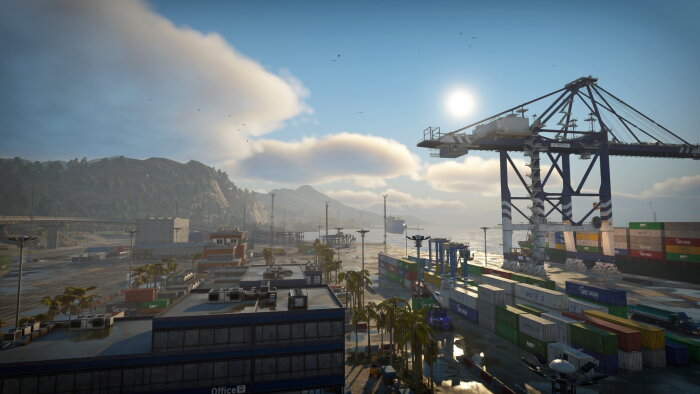
The financial and developmental aspects of the rebuilding effort are inextricably linked to the player's ability to secure and execute profitable contracts. Operationally, the port cannot sustain itself on goodwill alone. The strategic signing of new logistical agreements forms the backbone of the economic simulation. These contracts serve a dual purpose: they provide the incoming cash flow necessary for survival and expansion, while simultaneously dictating the type and volume of work that must be performed. Successfully fulfilling these commitments is critical, as the earned capital is the sole mechanism for progress. Players must constantly evaluate which jobs offer the best return against the required operational expenditure, balancing the urgent need for immediate cash with long-term infrastructure goals. This strategic contracting ensures that decisions about which ship to prioritize or which material to move next have tangible financial repercussions down the line.
The unrelenting nature of heavy industry ensures that equipment reliability is a constant concern. The machinery vital to the port’s operation—cranes, forklifts, heavy-duty tractors—are subjected to intense stress every hour of operation. The simulation incorporates a system of wear and tear, meaning that routine jobs inevitably degrade performance and increase the risk of catastrophic failure. A significant portion of the player’s time must therefore be dedicated to maintenance and repair management. This isn’t simply clicking an "upgrade" button; it often involves diagnosing specific mechanical issues and executing timely repairs, often under stringent deadlines imposed by incoming shipping schedules. Allowing critical equipment to fall into disrepair is a direct path to operational paralysis. Successfully managing this balance—pushing machinery hard enough to meet contract demands but pulling it back for necessary servicing—is a core test of the player’s management acumen.
Expansion, the ultimate goal beyond mere survival, is achieved incrementally through strategic investment of earned resources. As profitability stabilizes, the player gains the capacity to acquire more than just spare parts. Acquiring new operational lots becomes necessary to alleviate storage congestion, a common bottleneck in growing ports. Upgrading fundamental services, such as increasing the port’s fuel storage capacity or bolstering the electrical power supply needed for modernized equipment, represents significant capital expenditures that unlock higher tiers of operational throughput. Furthermore, conquering substantial business milestones—perhaps securing a contract with a major international shipping line or fully rehabilitating a long-dormant section of the dock—provides measurable evidence of the family business’s resurgence. Each investment is a calculated risk aimed at increasing efficiency and preparing the port for handling larger, more complex logistical challenges in the future.
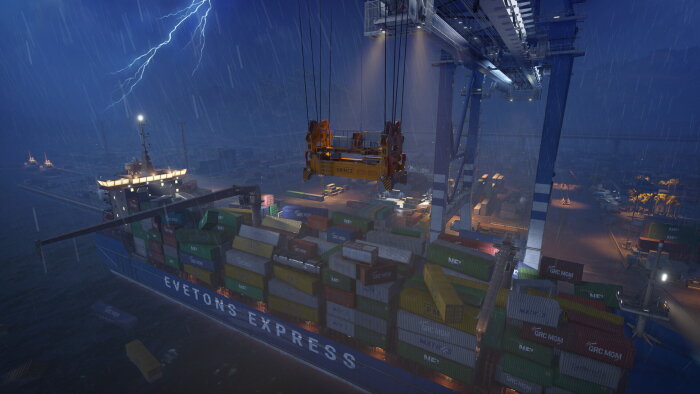
The machinery itself functions as a character in the game, a heavy, indispensable partner in the rebuilding process. The diverse fleet ranges from the towering, precision-focused ship-to-shore cranes, which demand steady hands to avoid damaging valuable hull containers, down to the ground vehicles like robust terminal tractors used for shuttling trailers across the yard. The detailed modeling extends to the interaction with the cargo itself. Lifting delicate or irregularly shaped materials requires an understanding of physics simulation—how the load might swing, how its weight affects the vehicle's center of gravity, and the necessity of careful, slow movements when navigating near densely packed areas. This constant engagement with the complex, powerful tools of the trade ensures that the simulation remains grounded in the physicality of shipyard labor, fostering a genuine respect for the expertise required to manage such an environment successfully.
Ultimately, Docked is framed as a holistic simulation of logistical recovery, where every single action, from the initial assessment of hurricane damage to the final successful delivery of a humanitarian aid shipment, contributes to a larger tapestry of revitalization. It is a game about inheriting a burden and transforming it through diligence, mechanical skill, and shrewd business sense. The player is not just playing a role but actively participating in the complete logistical chain—securing the work, mobilizing the apparatus, executing the physical labor, managing the maintenance, and reinvesting the profits. The journey to transform the dilapidated Port Wake into a thriving commercial hub, one carefully managed cargo lift and one essential repair at a time, forms the overarching, detailed objective of this realistic simulation experience, set for release in the early months of 2026 under the development and publishing banner of Saber Interactive.
Docked Key Features
- Command heavy machinery in a realistic port simulator!
- Rebuild and expand your family's dock after a devastating hurricane!
- Unload massive cargo from ships and ship out vital supplies!
- Master vehicle precision for intricate cargo handling and tight navigation!
- Manage equipment repairs under strict deadlines to keep operations running!
- Sign lucrative contracts to fuel your port's growth and profitability!
- Invest in upgrades, expand your lots, and conquer new business milestones!
- Experience the true scale and challenge of being a longshoreman!
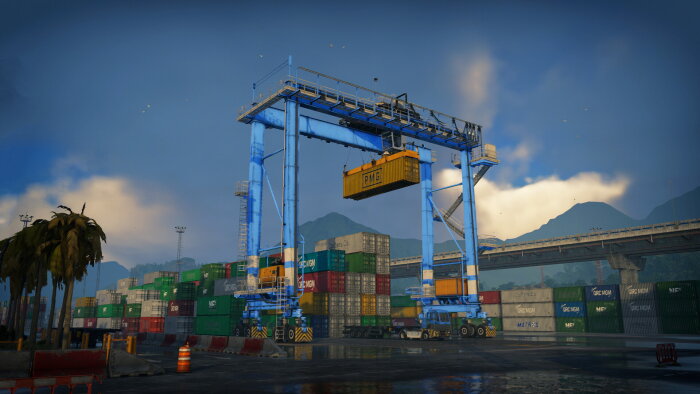
Docked Gameplay
Download Links for Docked
Download Docked.v20260813-P2P
1fichier
Docked.v20260813-P2P.rar
Gofile
Docked.v20260813-P2P.rar
Filemirage
Docked.v20260813-P2P.rar
Buzzheavier
Docked.v20260813-P2P.rar
Vikingfile
Docked.v20260813-P2P.rar
Multiup
Docked.v20260813-P2P.rar
Torrent
Pixeldrain - Gofile - Clicknupload - 1fichier
System Requirements for Docked
To run the game, players will need a 64-bit version of Windows 10 or 11, with a minimum requirement of an Intel Core i5-7600 or AMD Ryzen 7 2700 processor paired with 8 GB of RAM and a graphics card featuring at least 4 GB of VRAM, such as an Nvidia GeForce GTX 1650, AMD Radeon RX 470, or Intel ARC A580; for the best experience, the recommended specifications call for an Intel Core i5-12600K or AMD Ryzen 5 7600X processor, 16 GB of RAM, and a GPU with 8 GB of VRAM, like an Nvidia GeForce RTX 3070, AMD Radeon RX 6700 XT, or Intel ARC B580, with both minimum and recommended settings mandating 22 GB of available storage space on an SSD.
Minimum:- OS: Windows 10/11 64-bit
- Processor: Intel Core i5-7600 / AMD Ryzen 7 2700
- Memory: 8 GB RAM
- Graphics: 4 GB VRAM, Nvidia GeForce GTX 1650 / AMD Radeon RX 470 / Intel ARC A580
- Storage: 22 GB available space
- Additional Notes: SSD required
- OS: Windows 10/11 64-bit
- Processor: Intel Core i5-12600K / AMD Ryzen 5 7600X
- Memory: 16 GB RAM
- Graphics: 8 GB VRAM, Nvidia GeForce RTX 3070 / AMD Radeon RX 6700 XT / Intel ARC B580
- Storage: 22 GB available space
- Additional Notes: SSD required
How to Download Docked PC Game
1. Extract Release
2. Launch The Game
3. Play!